
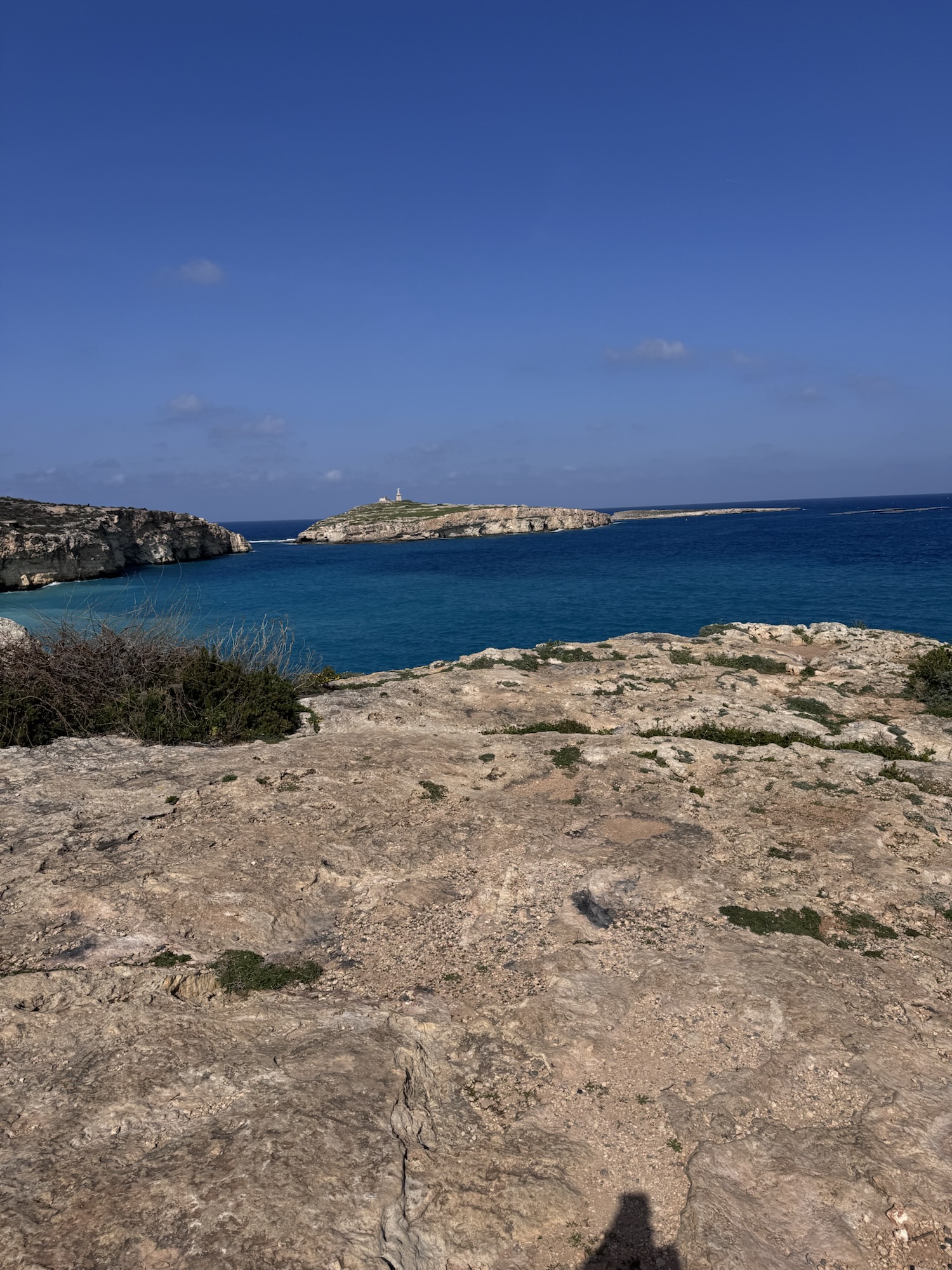
As I stood on the cliffs of Malta today, looking out over St. Paul’s Bay, I felt a little disappointed.
Most of the places we go to explore Christian history, we’re able to stand on the spot where it happened. Sometimes it’s a grave, and sometimes it’s a church built over the site. There is something grounding about being able to say, this is the place. Not here.
Where Paul’s shipwreck happened
But there was no getting out into the bay to stand where Paul’s ship ran aground in Acts 27. And even that location is debated—some place it here, others in nearby Salina Bay.


I also wanted to see where Paul walked ashore, where he was bitten by the snake, and where he shook it off in the fire. I figured someone would have marked that spot, maybe even built a church over it. If they did, it’s gone now, replaced by hotels and shoreline apartments.
Sure, we were definitely in the vicinity of where those things happened, but it’s just not the same as knowing the spot.
We did visit two locations in Rabat connected to Publius, the Roman official whose father Paul prayed for and was healed (Acts 28:7-10). One site is marked by a church, the other by Roman ruins.

The most certain of the sites we visited was the Grotto of St. Paul. This is the cave where it is believed Paul lived during his three months on Malta.
The tradition is ancient and consistent with the account in Acts. The grotto now sits beneath St. Paul’s Parish Church, near Rabat’s town centre.

What Paul did in Malta
Before we went out today, I read Acts 27-28 again, and as I did, the story began to take shape.
When Paul survived the snake bite, the locals assumed Paul was a god (Acts 28:6). The men from the ship had already seen something else. They had heard Paul predict the shipwreck and promise every life would be spared. As they began to discuss these events, Paul would not have let that moment pass. He would have pointed them to Jesus.
When Paul was taken into Publius’s house and learned Publius’s father was sick, Paul prayed for him, and Publius’s father was healed. Acts 28:8. When others who were sick heard what happened, they came to Paul and were healed. Acts 28:9.
Tradition says Publius become a Christian and Malta’s first bishop.
Here’s what struck me as a we stood there: Paul never planned to come to Malta. In fact, it appears Luke was unfamiliar with the island (Acts 28:1). Paul arrived here in a way none of us would choose—through a storm, a shipwreck, and uncertainty about what would come next.
Yet, once he arrived, he did what he always did: He made disciples.
What we can learn
This is what Jesus meant in Matthew 28, when He said, “Go therefore and make disciples of all nations . . .” The command is not just “go,” but “as you go . . .” Making disciples isn’t reserved for planned moments or ideal conditions. It happens along the way. And Malta was not an easy “along the way” moment.
Paul was on his way to Rome to stand before Nero. He knew what that could mean. Nero was no friend of Christians. Paul carried the constant weight of the churches he had planted. 2 Corinthians 11:28. He had every reason to be preoccupied, distracted—even afraid.
But when he came ashore, he didn’t turn inward. He saw those around him who needed Jesus, and he preached, prayed, and made disciples.
As he later wrote:
“. . . preach the word; be ready in season and out of season.” — 2 Timothy 4:2
The gospel is not seasonal. It is not a seed only to be planted in the spring or summer. We should share the gospel, not only when we feel spiritual but when the worries of our lives burden us.
We don’t know with certainty where Paul’s ship ran aground. We may not be able to stand where the snake bit him or where Publius’s father was healed.
But we know this: Paul was here. And because he was here, the gospel was planted in Malta.
Until tomorrow. GS

